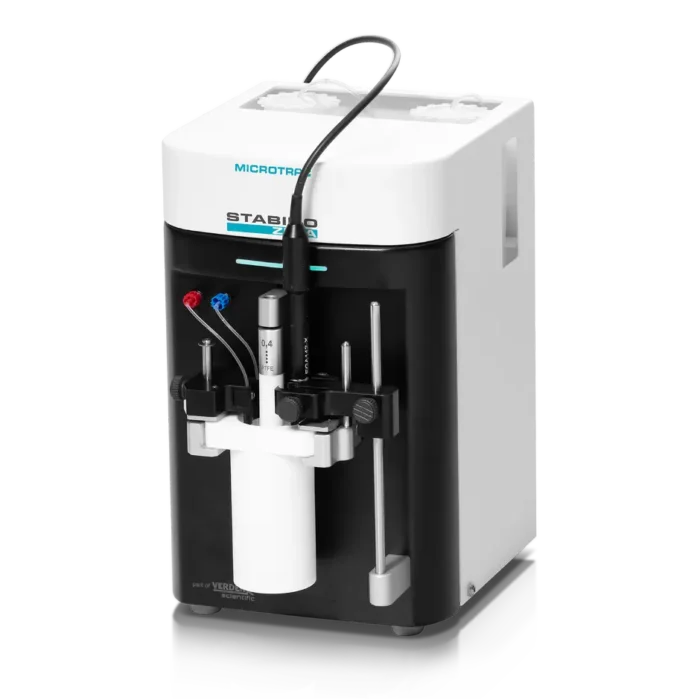
For the accurate determination of the zeta potential and colloidal stability, the STABINO ZETA is the first choice. It can replace the classical zeta potential measurement and is able to perform very fast titrations.
Nowadays, particle surface charge and interface potentials, such as the zeta potential and the streaming potential, are widely used to characterize the stability of suspensions, emulsions and nanoparticles. These parameters have established as a typical measure representing the electrostatic repulsion between particles.
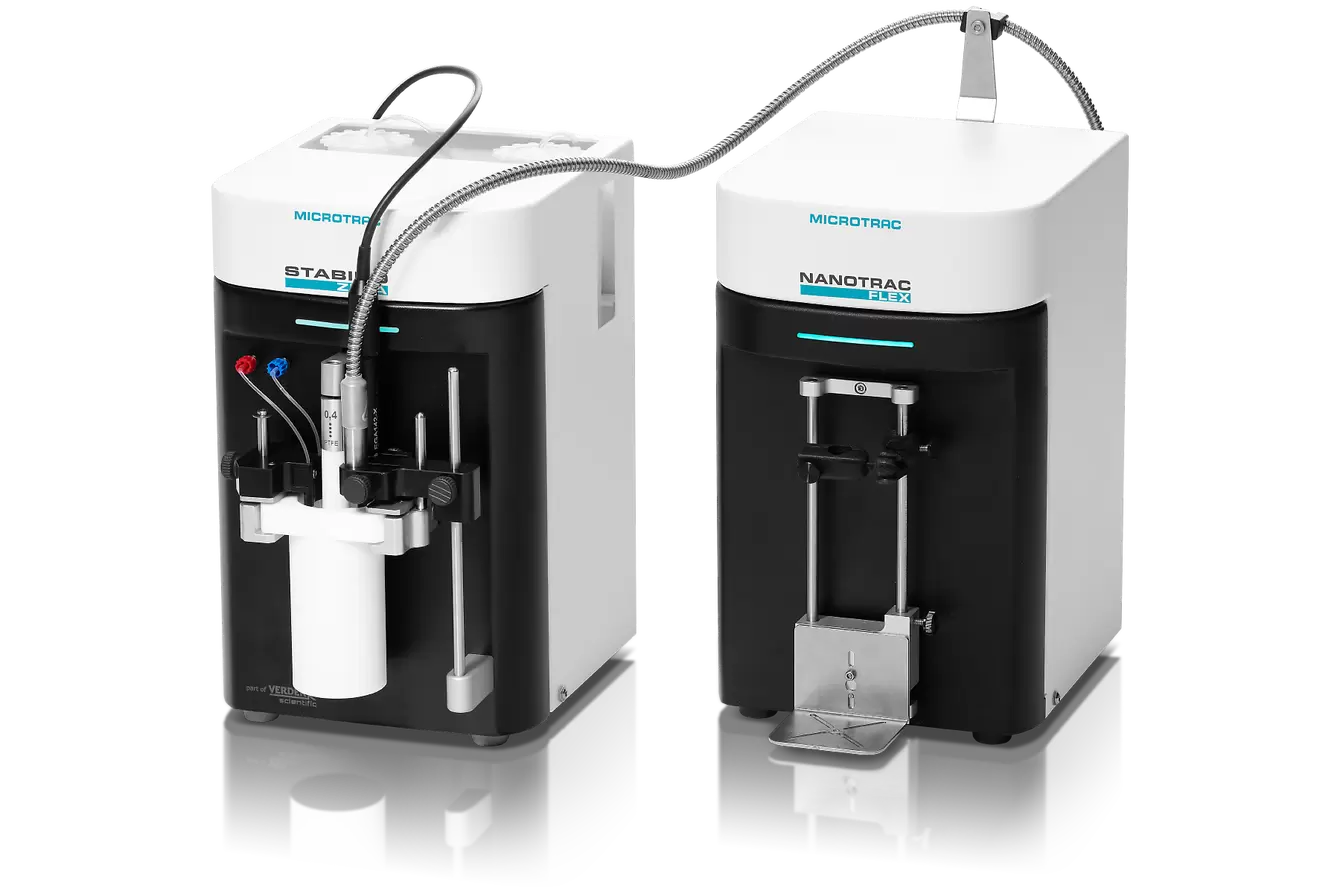
The STABINO ZETA has a high resolution and data point density, which allows very fast, precise and reproducible zeta potential measurements. It is possible to measure the zeta potential of particles in the range of 0.3 nm to 300 µm in a concentration range of up to 40 volume percent. Regarding the optimized measurement technology, the STABINO ZETA can measure up to 5 parameters simultaneously and within a few seconds: Zeta potential, streaming potential, conductivity, pH value, and temperature. In combination with our unique NANOTRAC FLEX, the particle size can also be measured as a sixth parameter simultaneously in the same sample.
Zeta Potential Analyzer STABINO ZETA Flawless Titration
The STABINO ZETA also has a built-in titration function in which all parameters are determined simultaneously at each titration dosing step. The determination of the isoelectric point is one of the titration options and is determined within a few minutes. Your titration options are:
pH Titration
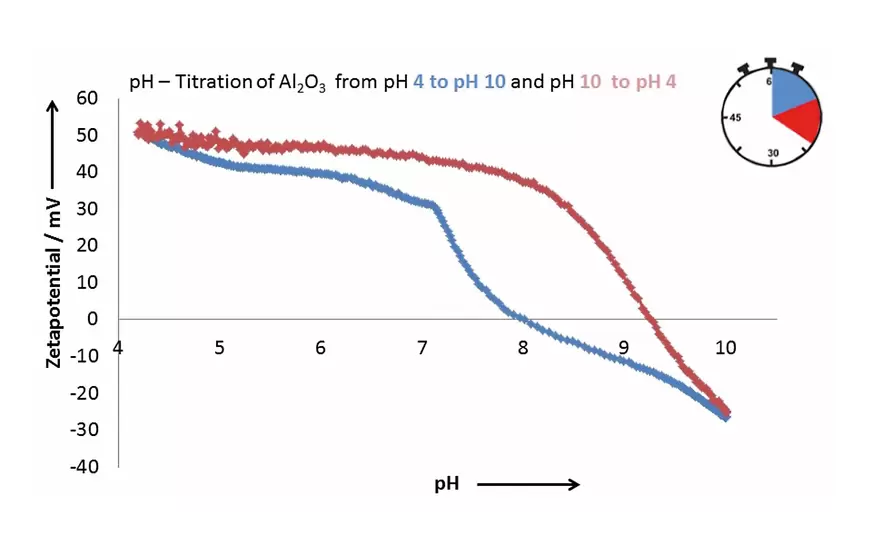
- Determination of the isoelectric point
- Stable pH ranges
Polyelectrolyte Titration
- Statements about stability
- Charge density
- Dispersant optimization
- Optimization in the formulation of your products
Titration With Salts
- Zeta potential as a function of conductivity
Zeta Potential Analyzer STABINO ZETA Your advantages at a glance
5 measurement parameters at the same time
To determine the quality of your samples, do you need more than just one measurement parameter? The STABINO ZETA provides you with information about the conductivity, zeta potential, streaming potential, temperature and pH of your sample with each measuring point.
“Mix and Measure” – an enormous advantage
Due to the continuous and rapid mixing of the sample and the titration solution, a charge titration is completed in minutes and additionally prevents sedimentation.
Measuring during titration
With the STABINO ZETA software you can follow your entire titration or measurement in real time by means of the curve progression, because for each titrated drop you receive a measuring point with all 5 measuring parameters.
Adjusted titration speed
The titration speed of the STABINO ZETA can be adapted to the reaction speed of your sample. For this purpose, the software offers the possibility to define standard operating procedures (SOPs) as desired.
Fast measurement time
Most known analytical systems are based on the zeta potential of electrophoresis, where titrations are often too inaccurate and time-consuming. For high sample throughput and thus valuable time savings, the STABINO ZETA has been optimized so that parameters required for quality assurance, for example, can be determined within seconds. For a polyelectrolyte or pH titration, the STABINO ZETA requires only 5 – 15 minutes and can record several hundred data points.
Simple operation
To focus only on the results, the software has been made as easy-to-use as possible. Just pour in 1 – 10 mL sample into the Teflon beaker of the STABINO ZETA, open the software and start the measurement.
Zeta Potential Analyzer STABINO ZETA Extension: In-situ size distribution
You are not only interested in the zeta potential of your sample, but also want to determine the particle size distribution?
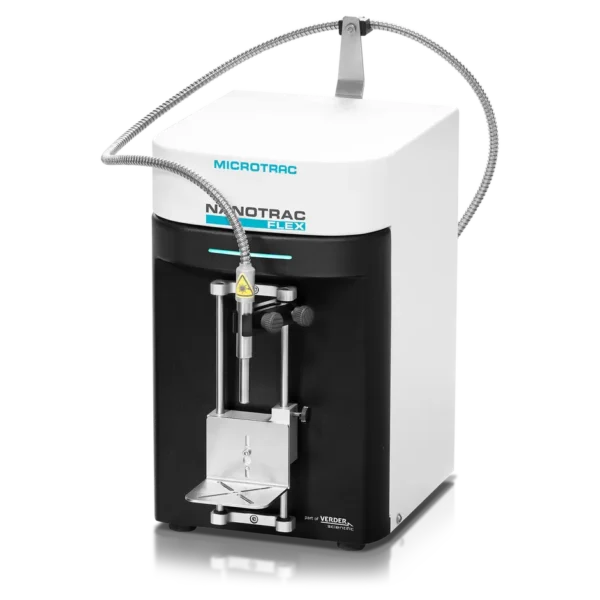
The NANOTRAC FLEX can easily be combined with the STABINO ZETA, i.e. the NANOTRAC FLEX measuring probe can be integrated into the STABINO ZETA measuring cell. This allows the size distribution to be determined either alone or, for example, during a charge titration. Coagulation becomes “visible” in-situ based on particle size, and it is possible to identify the critical agglomeration point of a sample. This is very helpful to evaluate colloidal systems even more precisely.
Accessories
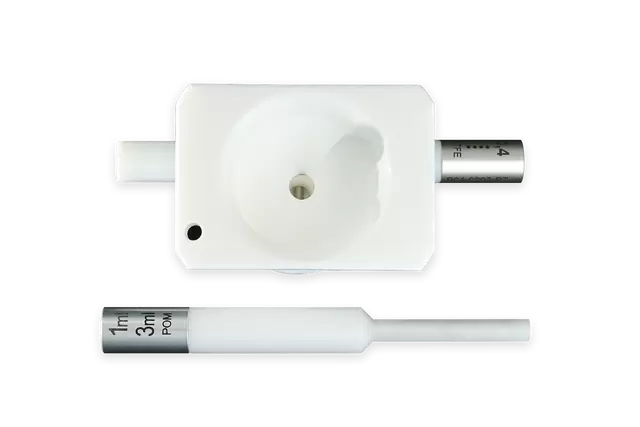
Measuring cell 1 ml and 3 ml with pestle
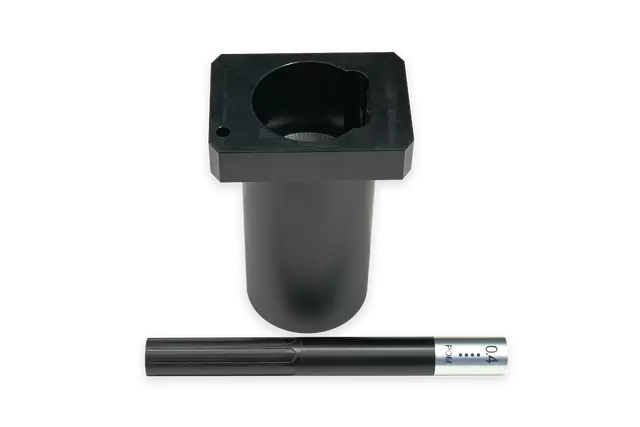
Measuring cell 10 ml – black –
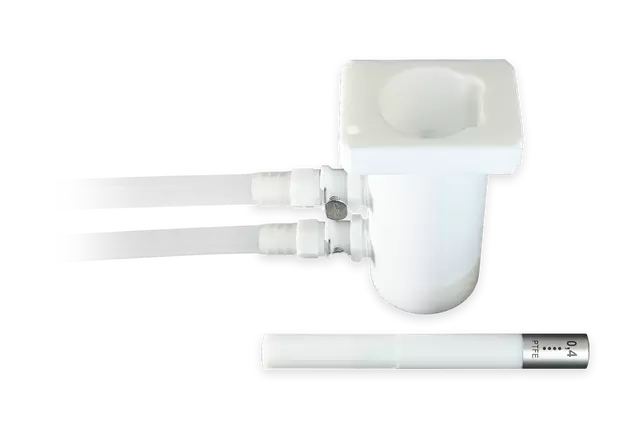
Tempered measuring cell 0 – 90 °C
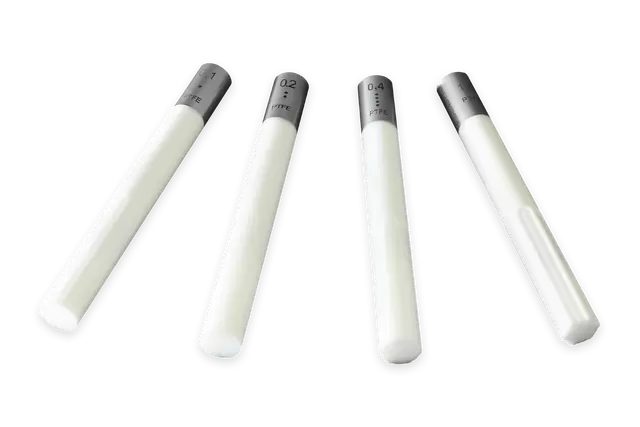
Piston set: 100 µ – 200 µ – 400 µ – 1000 µ – 1200 µ – 1500 µ – 2000 µ – conical
Zeta Potential Analyzer STABINO ZETA Typical Applications
Versatility is a great strength of Dynamic Light Scattering (DLS). This makes the method suitable for a variety of applications in both research and industry, such as pharmaceuticals, colloids, microemulsions, polymers, industrial minerals, inks and many more.

pharmaceuticals
- pharmaceuticals
- inks
- life sciences
- ceramics
- beverages & food

emulsions
- colloids
- polymers
- microemulsions
- cosmetics
- chemicals

steel
- environment
- adhesives
- metals
- industrial minerals… and many more!