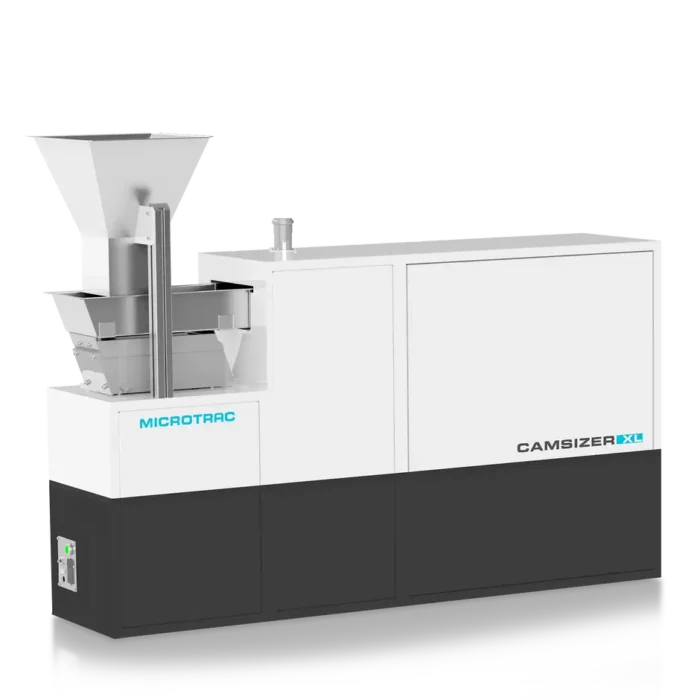
The CAMSIZER XL by Microtrac is a large particle size and shape analyzer that can measure particles ranging in size from 160 to 135,000 µm.
- Characterizes more than 40 morphological parameters of your material including 3D
- Non-contact measurement of dry particles ranging in size from 160 – 135,000 µm
- Customizable sample introduction
- Analyses 100 images per second with high-speed, high-resolution camera
- Enclosed optical system which reduces downtime for maintenance
Features
- By having the ability to measure more than 40 parameters including 15 size, 13 shape / form, 3 surface roughness, density, transparency, and 3D in one analysis, the CAMSIZER XL provides users with superior analysis capability that enables quick and confident decision-making regarding product quality
- Industry leading size range provides the user with greater analysis flexibility to measure a variety of materials
- The high-speed, high-resolution camera ensures multiple, vivid pictures of your material are collected which result in accurate analysis
- Engineered to be able to handle the toughest environments, the CAMSIZER XL is adaptable for any lab setting
- The self-cleaning mechanism allows a user to spend less time cleaning the instrument, and more time being productive
Typical Applications
Used in various fields such as: aggregates , building materials, fertilizers, food, geology / mining, glass beads, …

cement

fertilizers

wood chips