Description
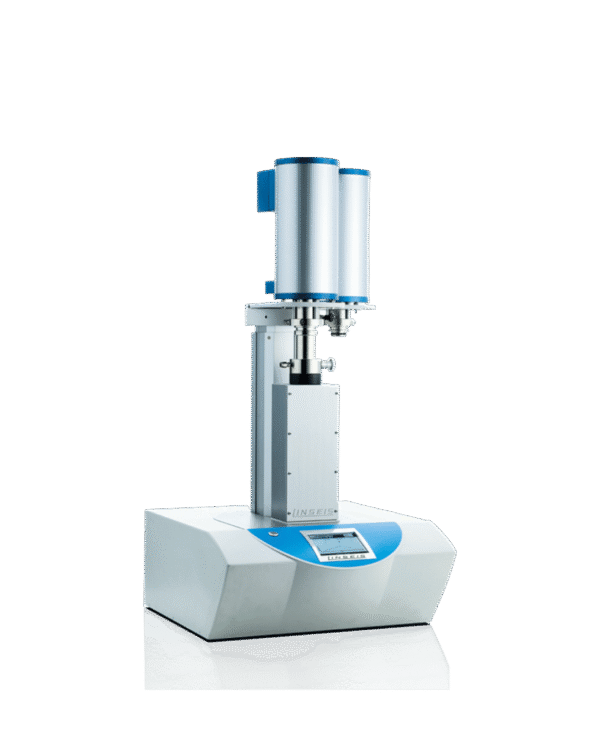
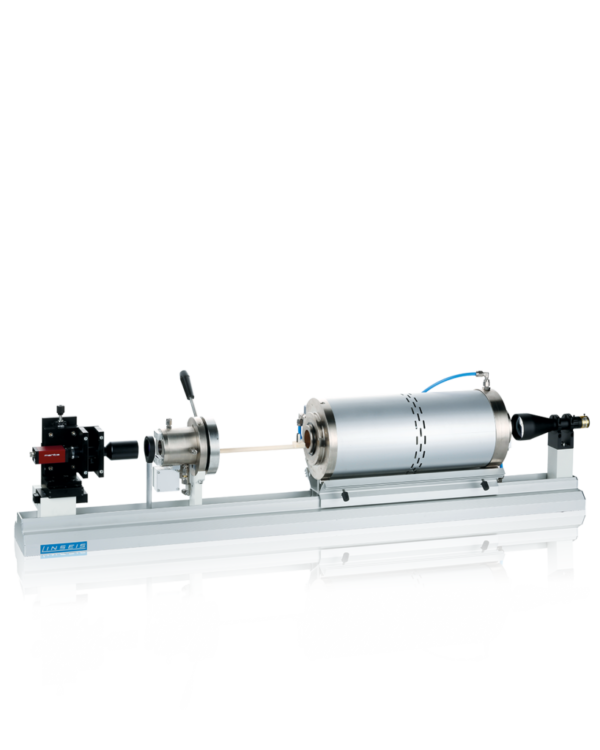
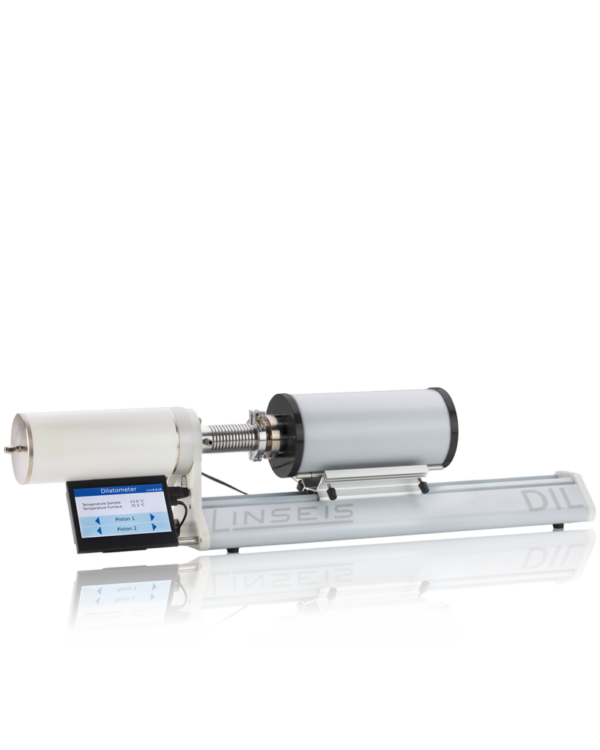
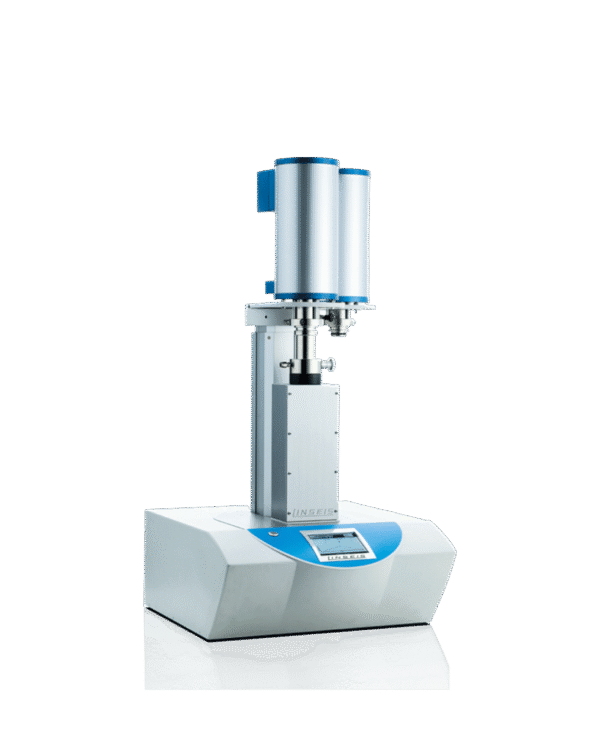
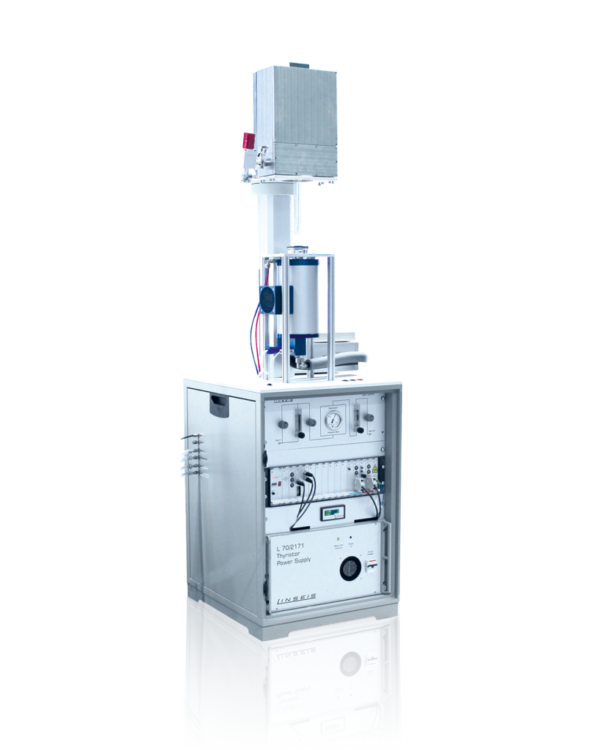
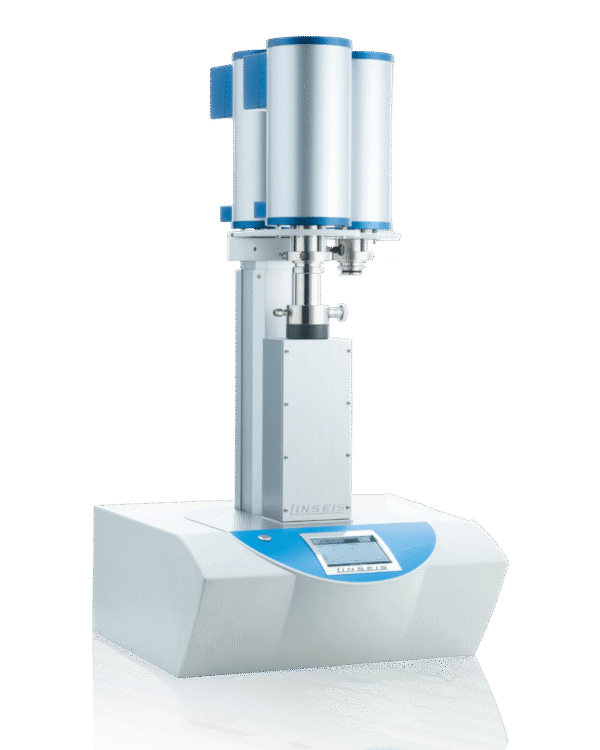
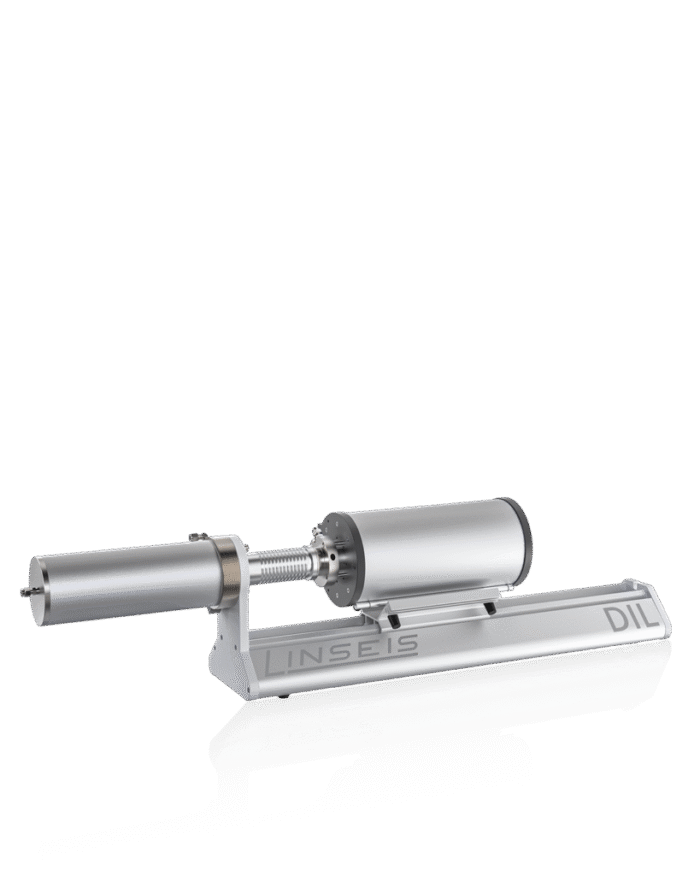
The main area of application of the LINSEIS L76 Horizontal dilatometer series is the CTE measurement of ceramics, bricks, tiles, porcelain and building materials.
It is also widely used for quality control in the ceramics and metal industry.
Thanks to the flexible interchangeable furnaces, the dilatometer covers a wide temperature range from RT to 1000°C, 1400°C and 1600°C.
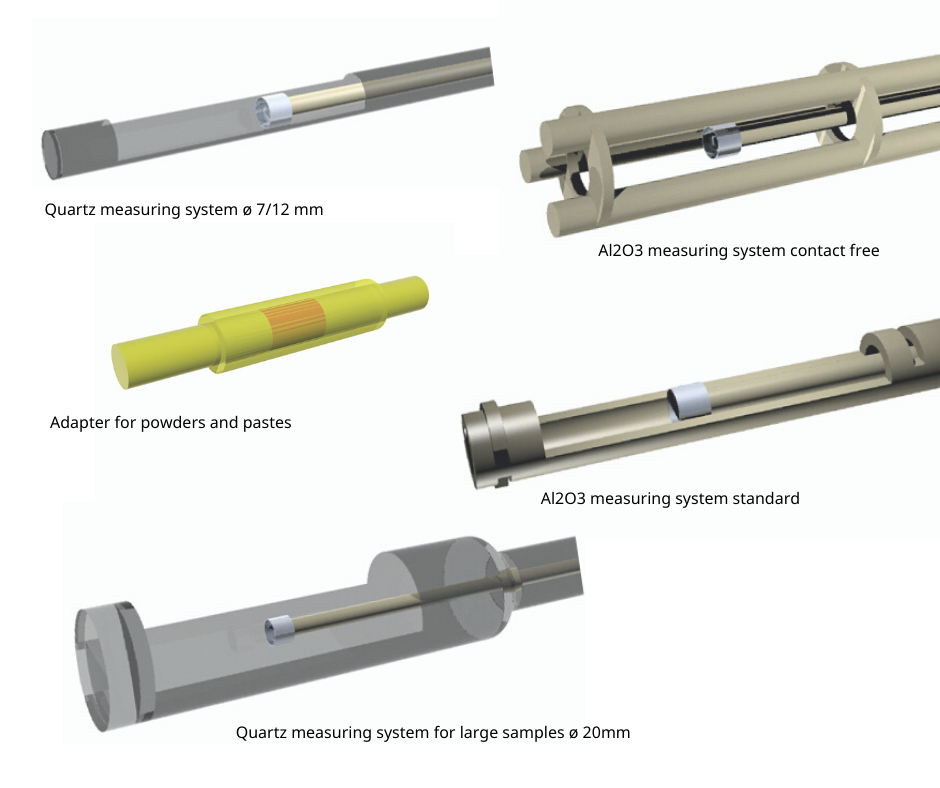
The measuring systems are made of either quartz glass (up to 1100°C) or Al2O3 (up to 1600°C).
The sensor is an LVDT (Linear Variable Differential Transformer) with maximum precision and infinitely variable resolution.
In combination with our LINSEIS software, the dilatometer offers an excellent solution for CTE measurements in standard quality control.
The following physical properties can be measured with the device: CTE, linear thermal expansion, sintering temperature, phase transformations, softening points, decomposition temperatures and glass transition temperatures.
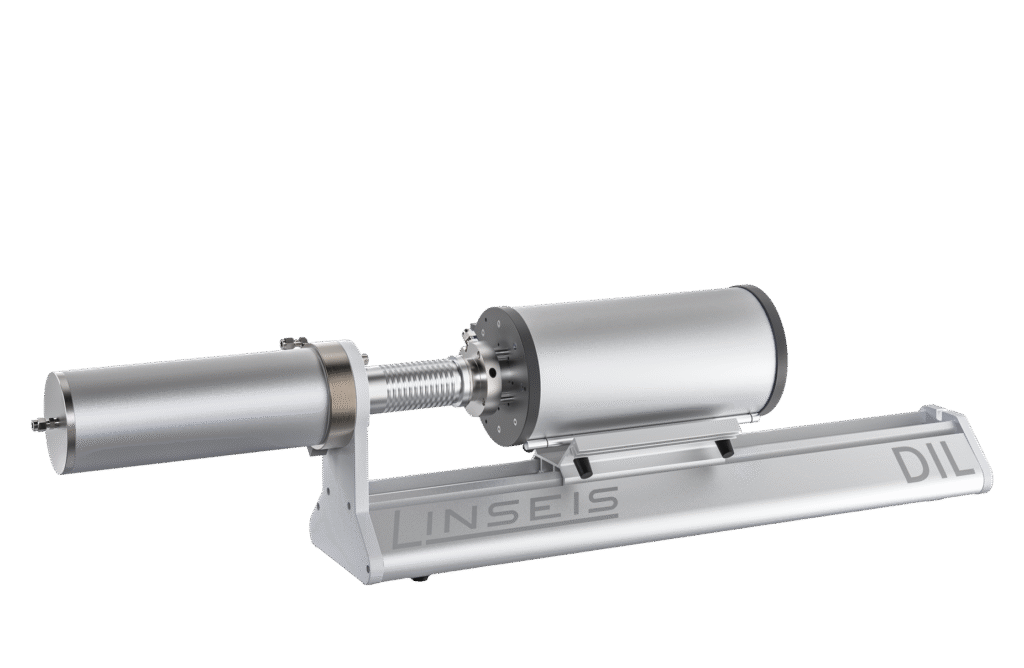
Unique features
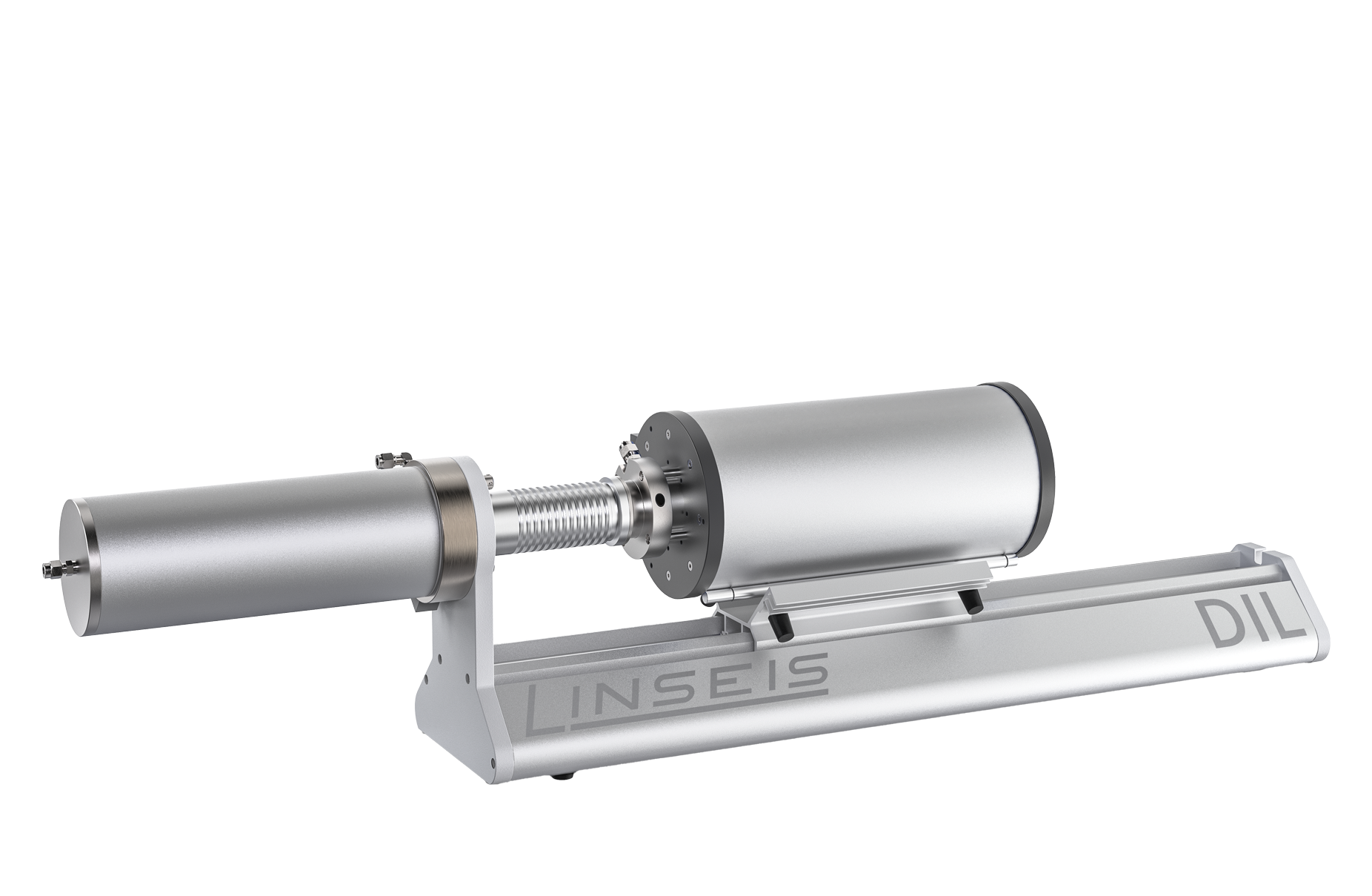 Flexible interchangeable ovens for temperatures from RT to 1000°C, 1400°C and 1600°CMeasurement of the following physical properties: CTE, linear thermal expansion, Alpha Physical, sintering temperature, phase transformations, softening points, Decomposition temperatures, glass transition temperaturesMeasuring systems made of quartz glass (up to 1100°C) or Al2O3 (up to 1600°C)LINSEIS software package for excellent CTE measurementsHigh-precision LVDT sensor with infinitely variable resolution
Specifications
| MODEL | DIL L76 Horizontal* |
|---|---|
| Temperature range: | RT – 1600 °C |
| LVDT | |
| Delta L resolution: | 0.05 nm (digital) |
| Measuring range: | +/- 2500 µm |
| Contact force: | Manual adjustment up to 1 N |
| Optical encoder | |
| Delta L resolution: | 1 nm |
| Measuring range: | +/- 25000 µm |
| Automatic sample length detection: | yes |
| Force modulation: | no |
| Contact force: | Manual adjustment up to 3 N |
| Multiple oven configuration: | optional |
| Gas metering: | Manual gas dosing or mass flow controller 1/3 or more gases |
| Contact force adjustment: | – |
| Single and double dilatometer: | – |
| Softening point detection: | inclusive |
| Density determination: | optional |
| L-DTA: | optional |
| Rate-controlled sintering (RCS): | optional |
| Thermal library (database): | optional |
| Electrical thermostatting of the measuring head: | inclusive |
| Low temperature measurement option: | LN2 |
| Vacuum-tight construction: | – |
| Automatic evacuation system: | – |
| OGS Oxygen Getter: | – |
| *Specifications depend on the configurations |
Accessories
- Devices for sample preparation
- Various sample holders (size, material)
- Caliper for manual or online entry of the sample length
- Turntable for up to 3 ovens
- Various gas boxes: manual, semi-automatic and MFC controlled
- Software option Rate Controlled Sintering (RCS)
- Various rotary and turbomolecular pumps
- Possibility of operation under 100% H2
- LN2 cooling
Software
The powerful LINSEIS thermal analysis software, which is based on Microsoft® Windows®, performs the most important function in the preparation, execution and evaluation of thermoanalytical experiments, in addition to the hardware used. With this software package, Linseis offers a comprehensive solution for programming all device-specific settings and control functions, as well as for data storage and evaluation. The package was developed by our in-house software specialists and application experts and has been tried and tested over many years.
Dilatometer functions
- Glass transition and softening point determination
- Automatic softening point switch-off, freely adjustable (system protection)
- Display of absolute or relative shrinkage or expansion
- Display and calculation of technical / physical expansion coefficients
- Rate-controlled sintering (software option)
- Sintering process evaluation
- Density determination
- Automatic evaluation routines
- System correction (temperature, zero curve, etc.)
- Automatic zero point adjustment
- Automatic punch contact pressure control
General functions
- Real-time color display
- Automatic and manual scaling
- Display of axes freely selectable (e.g. temperature (x-axis) versus delta L (y-axis))
- Mathematical calculations (e.g. first and second derivative)
- Storage of complete evaluations
- Multitasking function
- Multi-user function
- Zoom option for various curve sections
- Any number of curves can be loaded on top of each other for comparison
- Online help menu
- Free labeling
- EXCEL® and ASCII export of measurement data
- Data smoothing
- Zero curves are calculated
- Cursor function
- Statistical curve evaluation (mean value curve with confidence interval)
- Tabular printout of data and expansion coefficients
- Calculation of Alpha Phys, Alpha Tech, relative expansion L/L0
- Curve arithmetic, addition, subtraction, multiplication
Applications
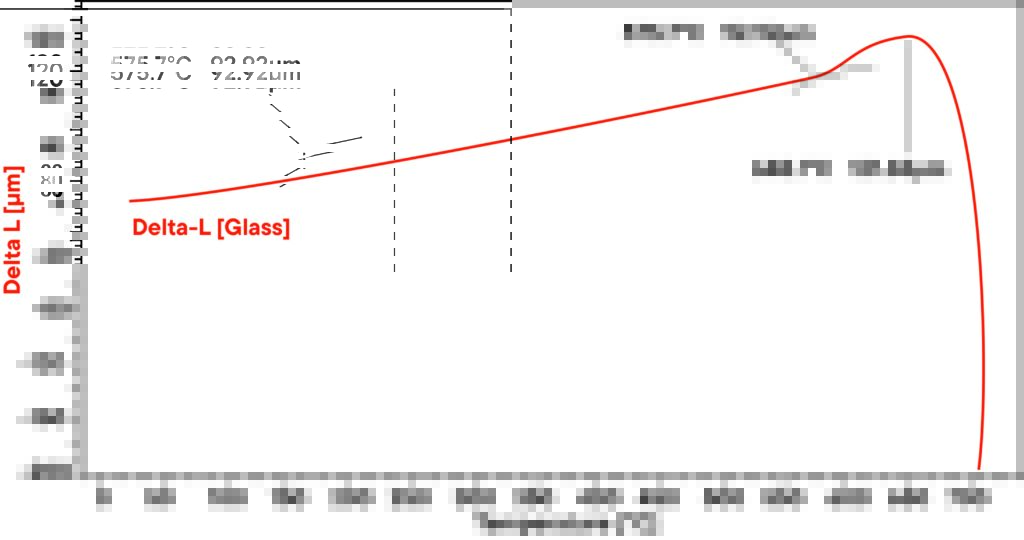
Application example: Glass sample, softening point
To measure a glass sample up to the softening point, a function can be set in the measuring program of the software to stop the heating when the softening point is reached.
The setting can be specified in µm or in % of the change in length.
If the set value of the measured ramp is exceeded due to the deformation caused by the softening of the material, the program switches to the next ramp, in which, for example, cooling is programmed or the heating is automatically switched off.
This allows the softening point to be measured automatically without manual intervention and at the same time protects the sample holder.