Description
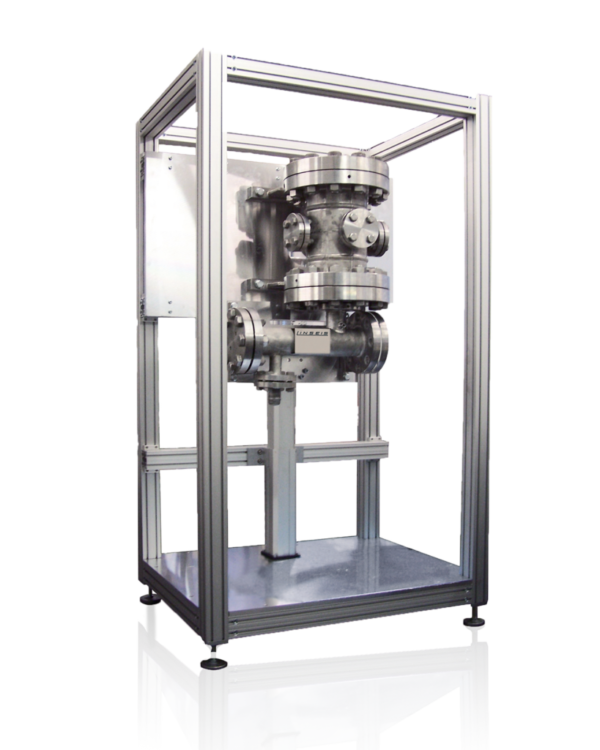
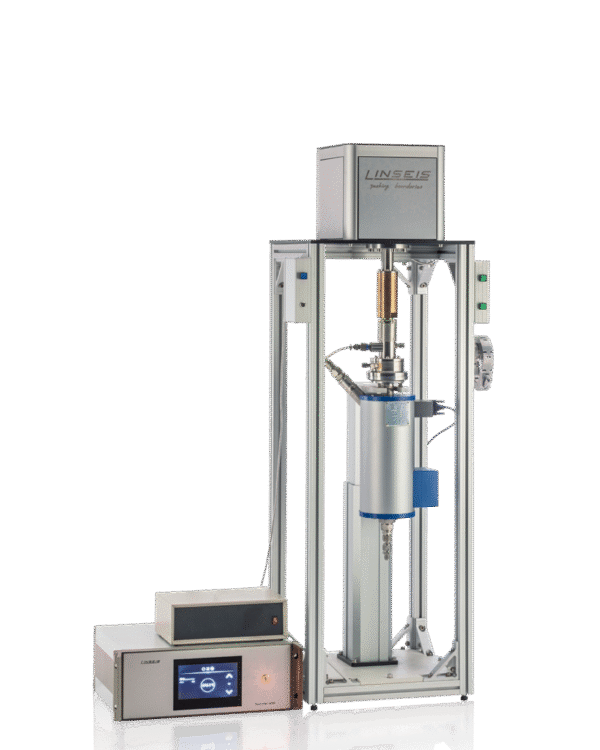
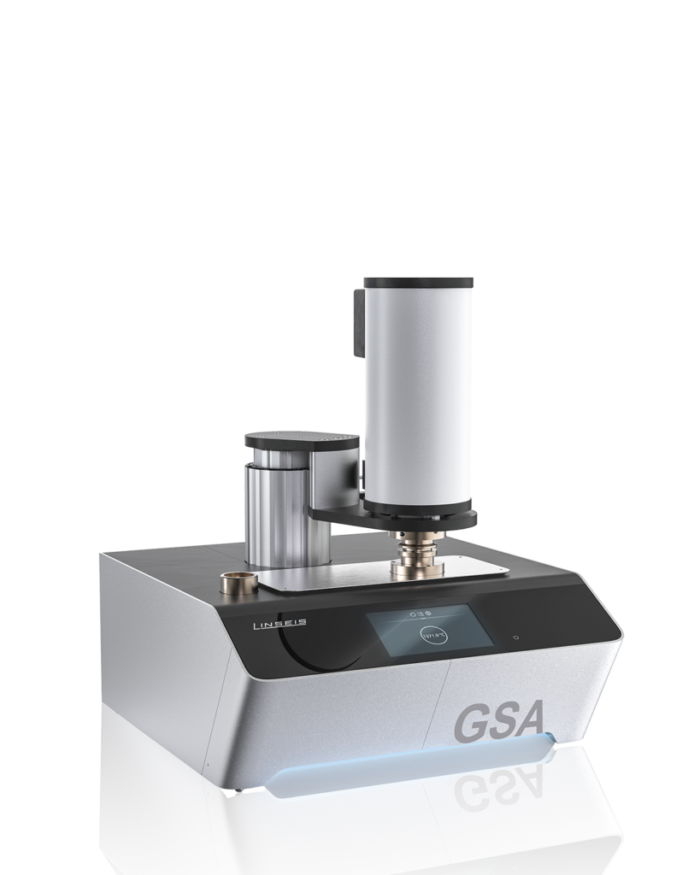
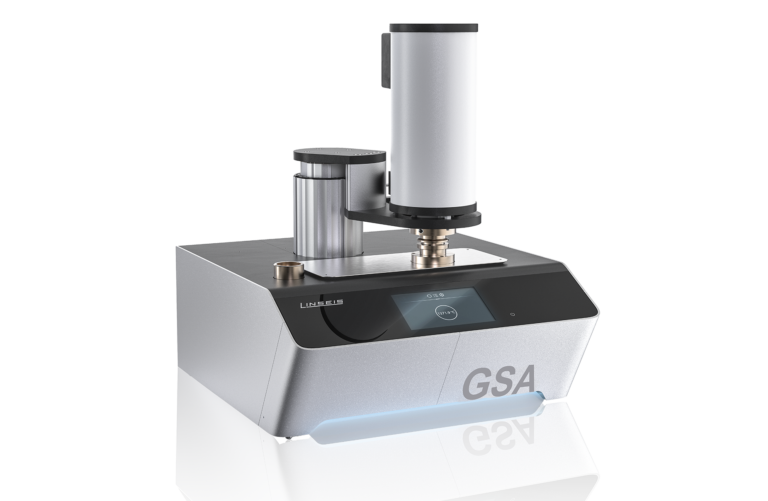
Our GSA L81 series is based on the proven standard design of the Linseis microbalance.
This ultra-sensitive microbalance is available in two versions with 0.1/1ug and 5 / 25 / 35g initial weights.
You can also choose from a wide range of furnaces for measurements from -150 to 1600 °C and UHV (ultra-high vacuum) up to 10 bar.
An optional TG-DSC (Thermogravimetry – Differential Scanning Calorimetry) sensor enables the simultaneous determination of weight change and caloric reaction in one measuring run.
Optional gas and vapor dosing systems as well as measuring devices for residual gas analysis are also available.
Usable vapors and gases are for example: Alcohols, hydrocarbons, aromatics, hydrogen, water, oxygen, nitrogen, argon, carbon dioxide, etc.
Unique features
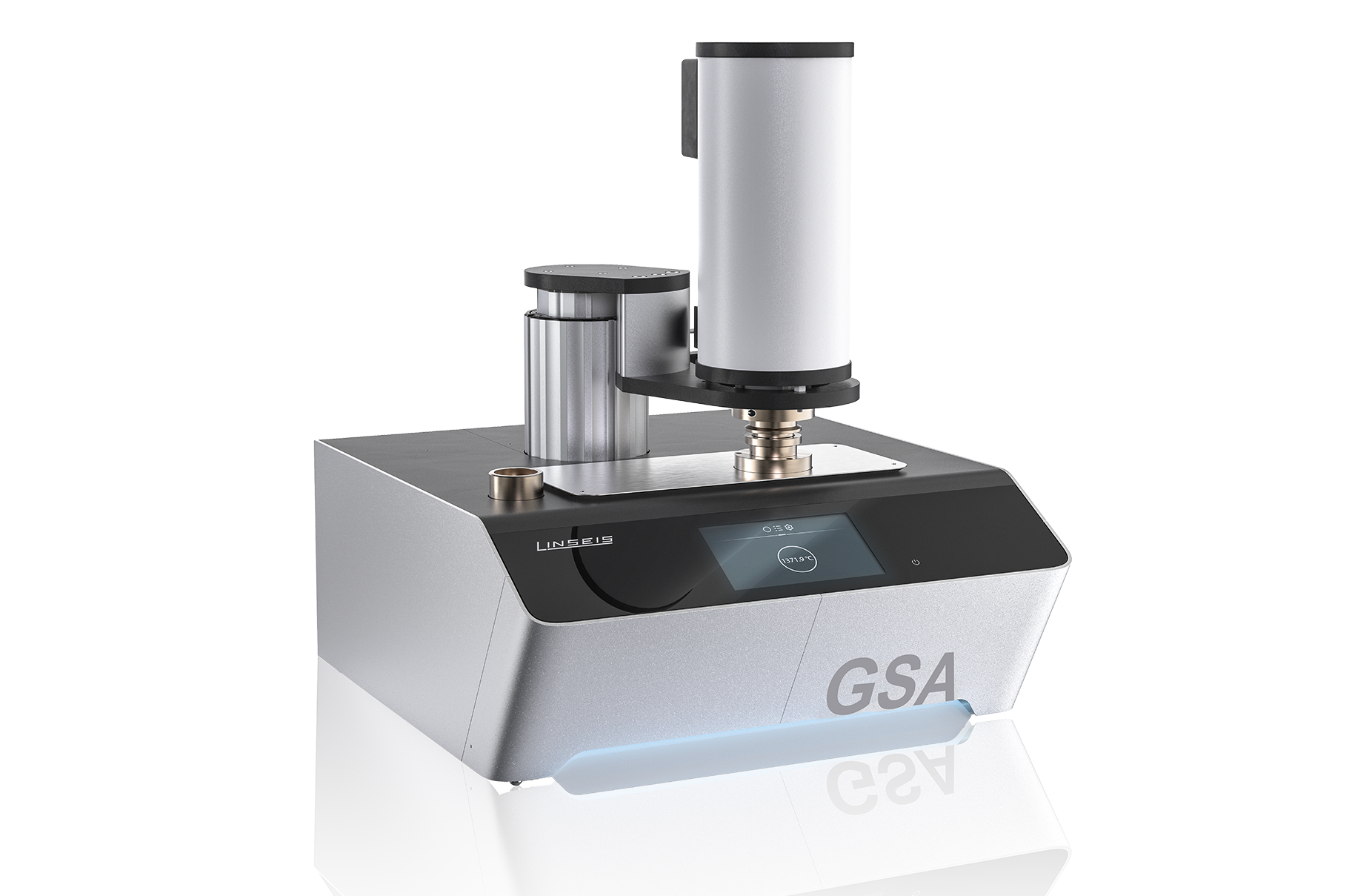 Wide temperature range: measurements from -150°C to 1600°C possible.Versatile gas and vapor dosing: Supports a variety of vapors and gases for comprehensive analysis options.Vacuum and pressure: Ultra-high vacuum up to 10-5 mbar and pressure measurements up to 10 bar.Ultrasensitive microbalance: Available in versions with 0.1/1 µg and 5/25/35 g initial weight.Simultaneous TG-DSC analysis: Optional sensors enable the simultaneous determination of weight changes and caloric reactions.
Specifications
| MODEL | GSA L81* |
|---|---|
| Temperature range: | -150°C to 1600°C |
| Sample weight: | up to 5/25/35 g (higher volumes on request) |
| Resolution: | 0.025 / 0.1 μg |
| Vacuum: | up to 10E-5 mbar |
| Pressure: | up to 15 bar |
| Sensors: | TG TG – DTA |
| Sensor material: | E/K/S/B |
| Electronics: | integrated |
| Interface: | USB |
| *Specifications depend on the configurations | |
Data sheet
Available accessories
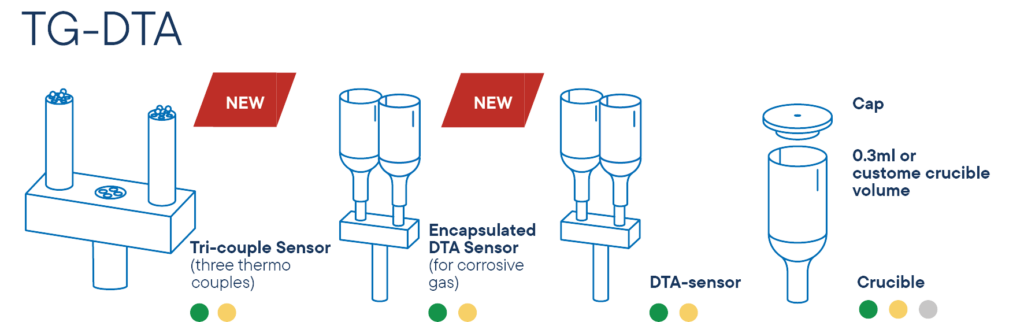
- Various gas boxes: manual, semi-automatic and MFC controlled
- Variety of crucibles (gold, silver, platinum, aluminum, Al2O3, graphite, tungsten, stainless steel (high pressure), etc.)
- Various rotary and turbomolecular pumps
- Various measuring systems
- Optional gas analysis
- Software for calculating the DTA signal
General Funcitons:
- Gravimetric sorption analysis
- Sorption enthalpies (simultaneous TG/DSC sensor)
- Density determination
- Gas storage
- In-situ gas analysis (FTIR, Raman, ELIF)
- Kinetic analysis
- Corrosive atmospheres – Magnetic suspension balance
- Adsorption isotherm
- TPD, TPO, TPR measurements (-196°C to 1800°C)
Software
Making values visible and comparable
The powerful LINSEIS thermal analysis software, which is based on Microsoft® Windows®, performs the most important function in the preparation, execution and evaluation of thermoanalytical experiments, in addition to the hardware used.
With this software package, Linseis offers a comprehensive solution for programming all device-specific settings and control functions, as well as for data storage and evaluation.
The package was developed by our in-house software specialists and application experts and has been tried and tested over many years.
TG properties
- Percentage (%) and absolute (mg/ug) change in mass
- Evaluation of the mass loss
- Residual mass determination
- 1st and
2nd derivative (peak temperature of the mass change)
DSC properties
- Complete glass dot determination
- Specific heat Cp determination
- Multible measuring/melting points for temperature calibration
- Peak flat / enthalpy determination (various baseline types)
- Enthalpy determination taking into account the change in mass
- Determination of onset, peak, inflection point and final temperature
General functions
- Real-time color display
- Automatic and manual scaling
- Display of the axes freely selectable (e.g. temperature
e.g. temperature (x-axis) against delta L (y-axis)) - Mathematical calculations (e.g. first and second derivatives)
- Saving complete evaluations
- Multitasking function
- Multi-user function
- Zoom function for curve sections
- Any number of curves can be loaded on top of each other for comparison
- Online Help Menu
- Free labeling
- EXCEL® and ASCII export of measurement data
- Data smoothing
- Zero curves are offset
- Cursor function
- Statistical curve evaluation (mean value curve with confidence interval)
- Tabular printout of the data and expansion coefficients
- Calculation of Alpha Phys, Alpha Tech, relative expansion L/L0
- Curve arithmetic, addition, subtraction, multiplication
Applications
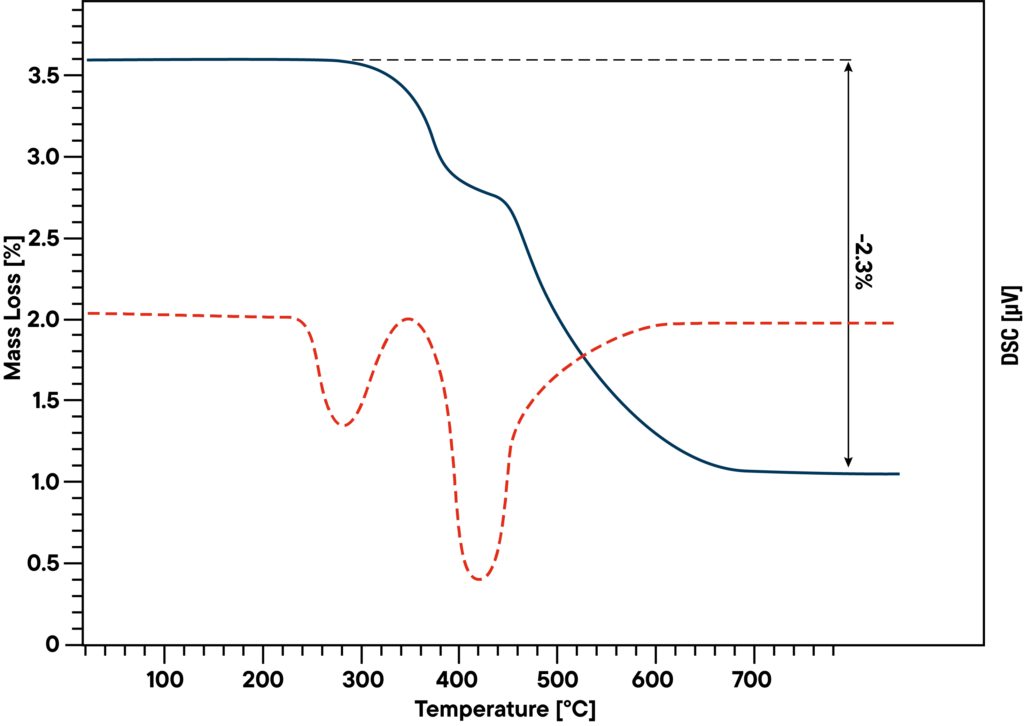
Application example: Desorption of hydrogen from TiH2
Titanium hydride is a common used hydrogen resource for controlled release of hydrogen in various reactions. On the one hand it can be used as a catalyst in liquid chemistry in situ as a hydrogen source, on the other hand it can be used for example in batteries or fuel cells for controlled hydrogen release. To get an idea what amount of hydrogen is released at what temperature, it is important to know the temperature dependent decomposition behavior and released amount of heat, which can be monitored by simultaneous thermal analysis (STA).
In this STA measurement, the release of hydrogen by titanium hydride was monitored. TG and DSC signal were measured from Room Temperature to 800°C while the sample was heated linear in Argon atmosphere with 10K/min. Between 300°C and 600°C, there is a two-step mass loss of 2.3% in total which means the complete amount of bound hydrogen is released in that process. The DSC curve shows the corresponding Desorption peaks (red curve).