Description
To the point
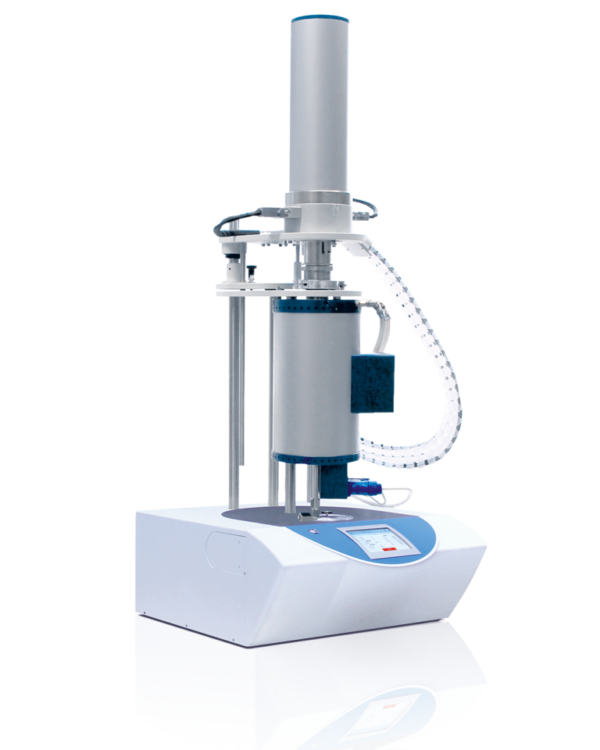
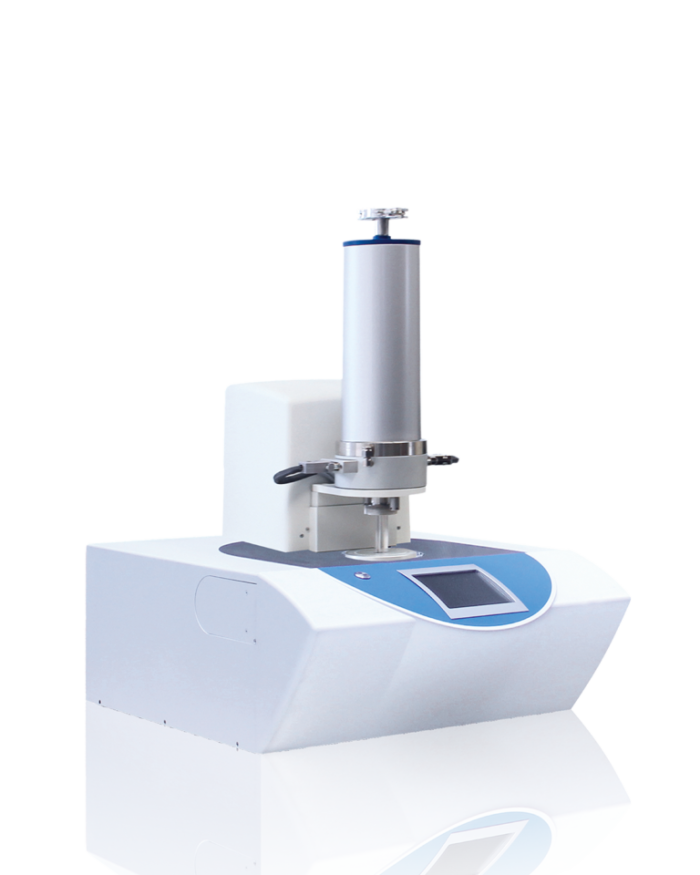
The LINSEIS TMA PT 1000 (TMA L71) uniquely combines the flexibility to measure different types of load with extremely accurate measurement of expansion and deformation.
This enables extremely precise results to be achieved for a wide range of applications.
Due to the vacuum-tight design of the system and the optional use of a gas control, measurements can be carried out in static and dynamic atmospheres.
Typical areas of application are: Composites, glass, polymers, elastomers, paints and varnishes, as well as composite materials.
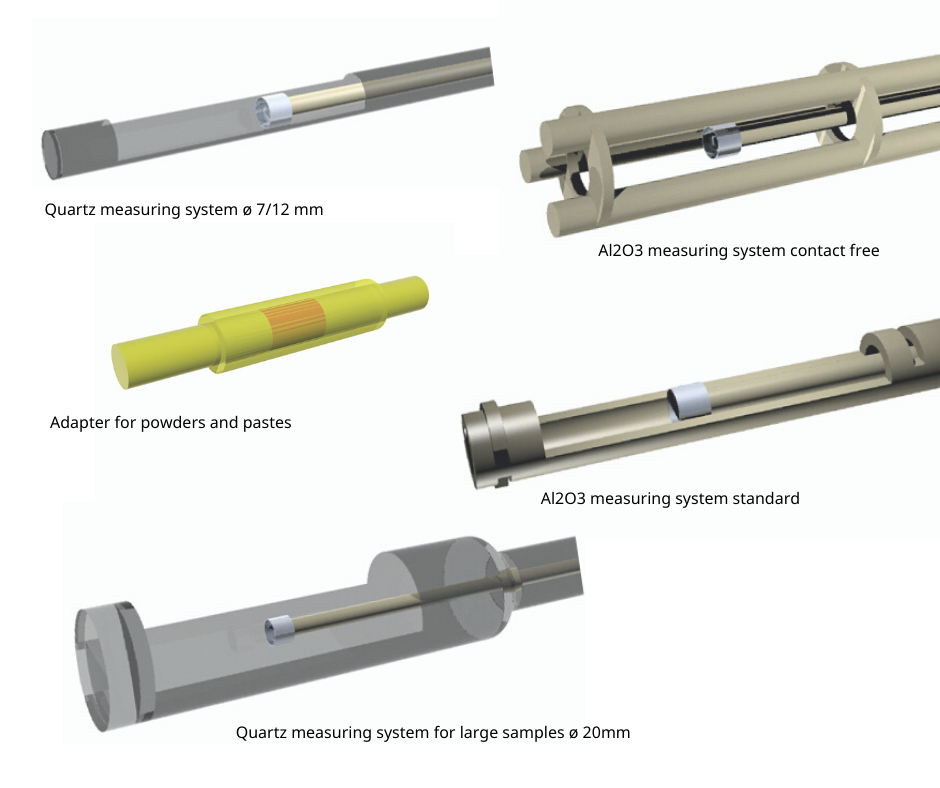
The large number of sample holders allows the measurement of cylindrical and liquid samples, as well as film and fiber samples.
TMA / DTMA functions
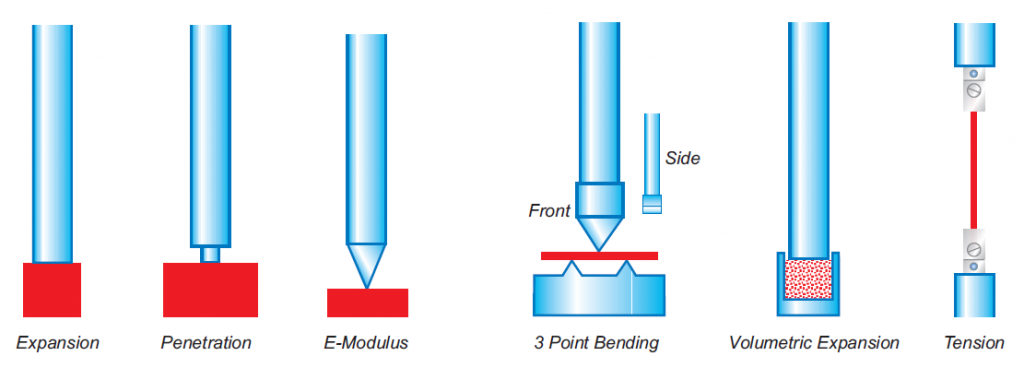
With low, constant load:
- Linear thermal expansion analysis
- Volume changes
- Phase transitions
- Investigation of sintering processes
- Examination of the softening point
- Conversion points
- Swelling behavior
- Voltage investigation
With increasing constant load:
- Penetration
- Transition and comparative tests
- 3-point bending test
With dynamic load:
- Visco-elastic behavior
Additional optional functions:
- DTA examination
- (RCS) Rate Controlled Sintering Software
Unique Features
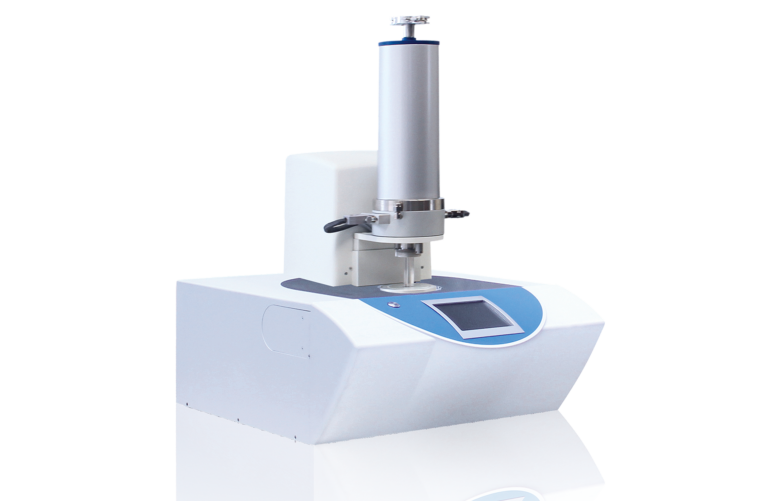 Vacuum-tight setup: Measurements in static and dynamic atmospheres.Wide temperature range: From -150°C up to 1000°C.High accuracy: Extremely precise measurement of expansion and deformation.Wide range of applications: Suitable for composites, glass, polymers, elastomers, paints and varnishes.Flexible measuring system: Suitable for various Load types and specimen shapes.
Specifications
| MODEL | TMA PT 1000 (TMA L71) |
|---|---|
| Temperature range: | RT up to 1000°C -150°C optional |
| Sample size: | 30 mm |
| Force: | up to 1 or 5.7 N |
| Frequency: | 1 Hz |
| Resolution: | 0.125 nm |
| Atmospheres: | red., inert, oxid., static/dyn. |
| Electronics: | Integrated |
| Interface: | USB |
| MODEL | TMA PT 1000 EM (TMA L71 EM) |
|---|---|
| Temperature range: | -150 up to 1000°C -260 up to +220°C |
| Sample size: | 30 mm |
| Force: | up to 1 / 5.7 / 20 N |
| Frequency: | – |
| Resolution: | 0.125 nm |
| Atmospheres: | red., inert, oxid., static/dyn. |
| Electronics: | Integrated |
| Interface: | USB |
Available accessories
- Various gas boxes: manual, semi-automatic and MFC controlled
- Variety of crucibles (gold, silver, platinum, aluminum, Al2O3, graphite, tungsten, stainless steel (high pressure), etc.)
- Various rotary and turbomolecular pumps
- Various measuring systems
- Optional gas analysis
- Software for calculating the DTA signal
Software
Making values visible and comparable
The powerful LINSEIS thermal analysis software, which is based on Microsoft® Windows®, performs the most important function in the preparation, execution and evaluation of thermoanalytical experiments, in addition to the hardware used.
With this software package, Linseis offers a comprehensive solution for programming all device-specific settings and control functions, as well as for data storage and evaluation.
The package was developed by our in-house software specialists and application experts and has been tried and tested over many years.
Thermomechanical analysis properties
- Glass transition and softening point determination
- Automatic softening point switch-off, freely adjustable (system protection)
- Display of absolute or relative shrinkage or expansion
- Representation and calculation of technical / physical expansion coefficients
- Rate-controlled sintering (software option)
- Sintering process evaluation
- Automatic evaluation routines
- System correction (temperature, zero curve, etc.)
- Automatic zero point adjustment
- Automatic punch contact pressure control
- Density determination
- Modulus of elasticity
- Force variably adjustable
General functions
- Real-time color display
- Automatic and manual scaling
- Display of the axes freely selectable (e.g. temperature
e.g. temperature (x-axis) against delta L (y-axis)) - Mathematical calculations (e.g. first and second derivatives)
- Saving complete evaluations
- Multitasking function
- Multi-user function
- Zoom function for curve sections
- Any number of curves can be loaded on top of each other for comparison
- Online Help Menu
- Free labeling
- EXCEL® and ASCII export of measurement data
- Data smoothing
- Zero curves are offset
- Cursor function
- Statistical curve evaluation (mean value curve with confidence interval)
- Tabular printout of the data and expansion coefficients
- Calculation of Alpha Phys, Alpha Tech, relative expansion L/L0
- Curve arithmetic, addition, subtraction, multiplication
Applications
Application example: Polycarbonate PC
An important factor in the assessment of thermoplastic applications is the glass transition point.
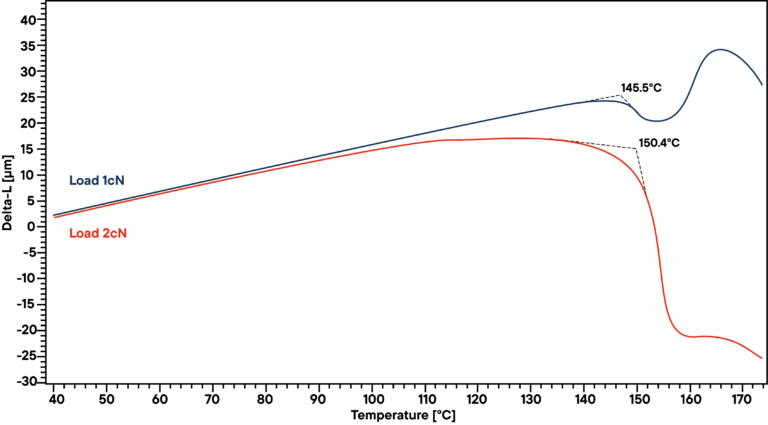
By applying different loads to polycarbonate parts during TMA measurement, the softening point is recognized long before the glass point transformation.
In this study, the material was tested under different punch pressures (1cN and 2cN) and the penetration was measured.
The heating rate was 5K/min.