
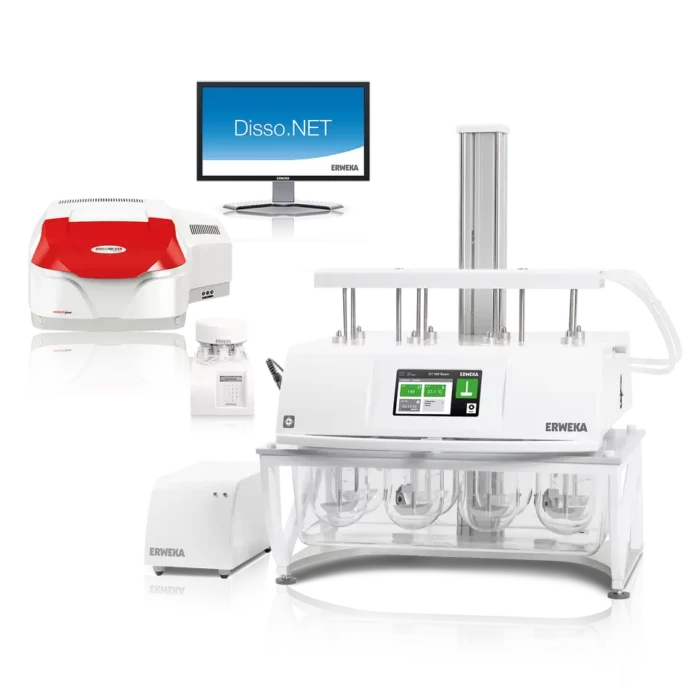

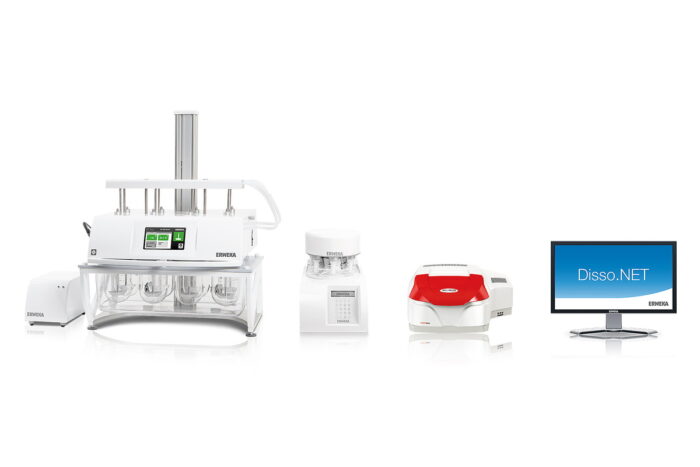
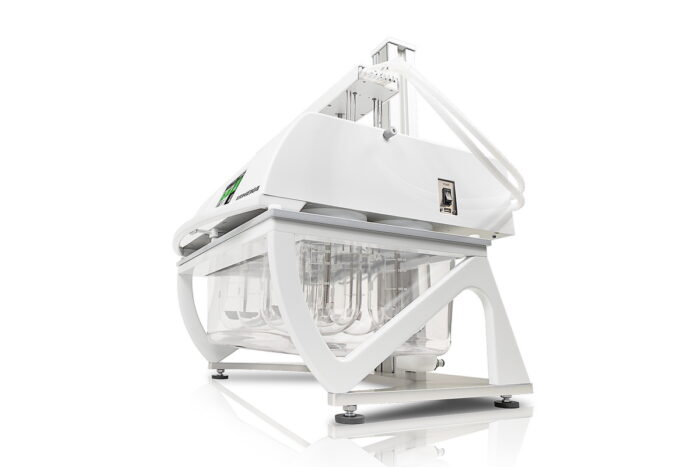

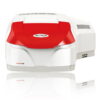
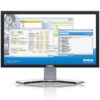
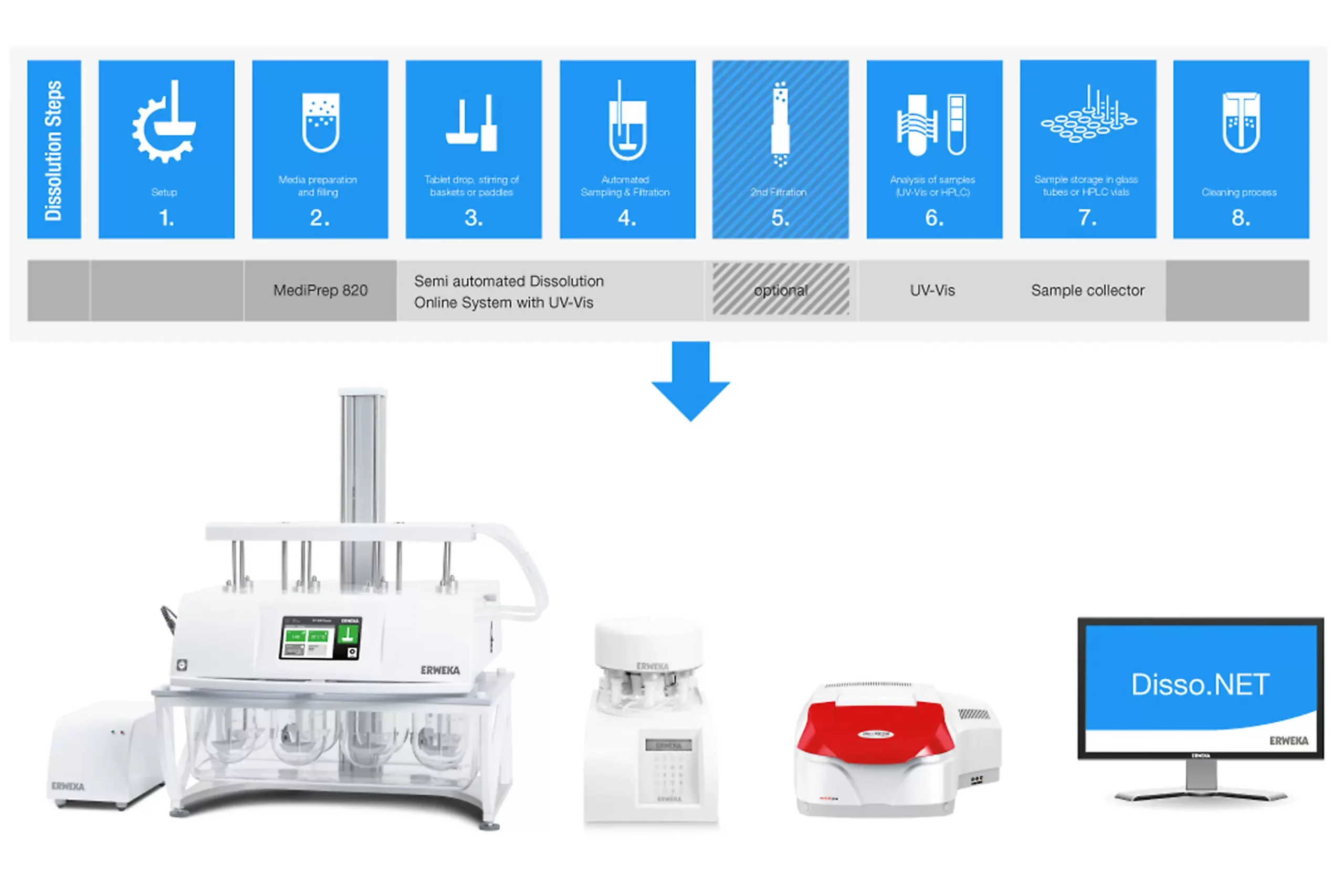
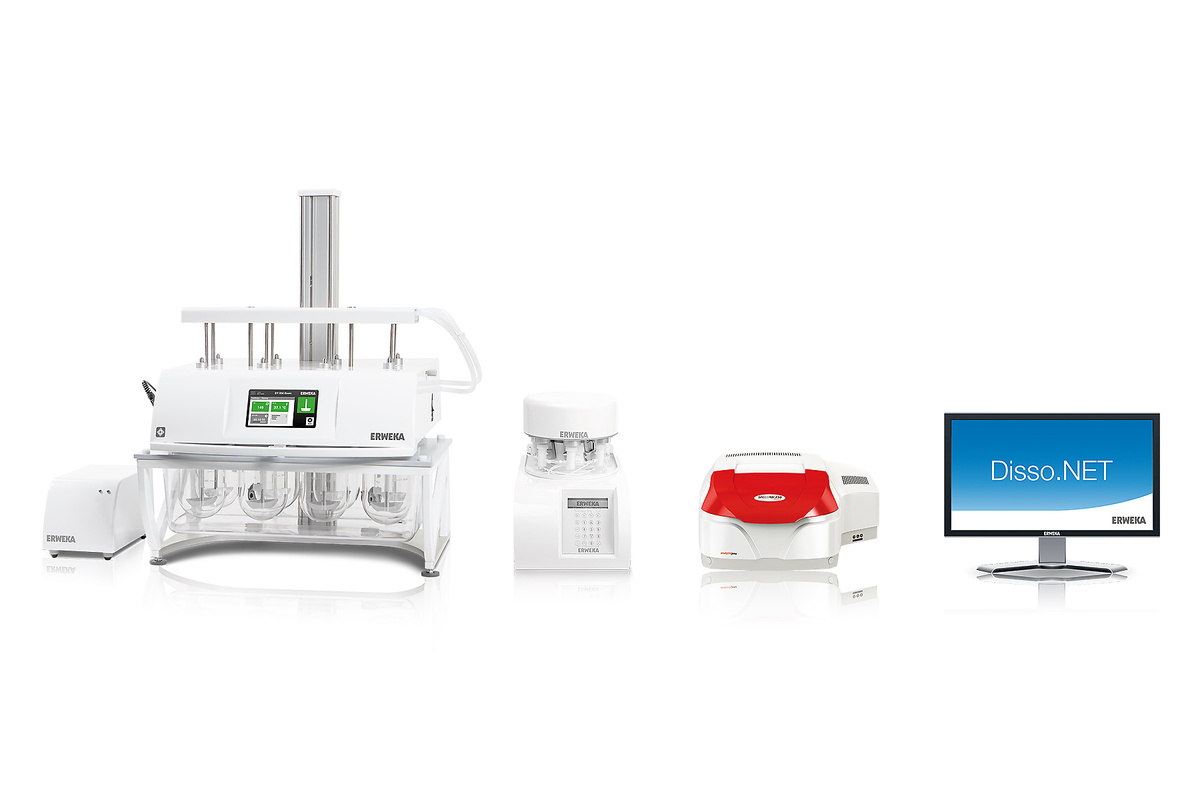
The ERWEKA dissolution online systems are the perfect, semi-automatic solution for dissolution testing with automated UV/VIS online analyses.
The DT 950 with the integrated, automated ASS-9 sampling station transports the freshly sampled media directly to the UV/VIS analyzer (several brands available). There the samples can be measured and the results are then stored in ERWEKA’s sophisticated Disso.NET dissolution software.
ERWEKA offers several types of UV/VIS analyzers, such as the Shimadzu 1900i, the Analytic Jena Specord 210/8 or the ThermoFischer Evolution Pro, all combined with our dissolution tester DT 950 and either a peristaltic pump IPC 8 or a PVP piston pump. All components are controlled by the Disso.NET PC software.
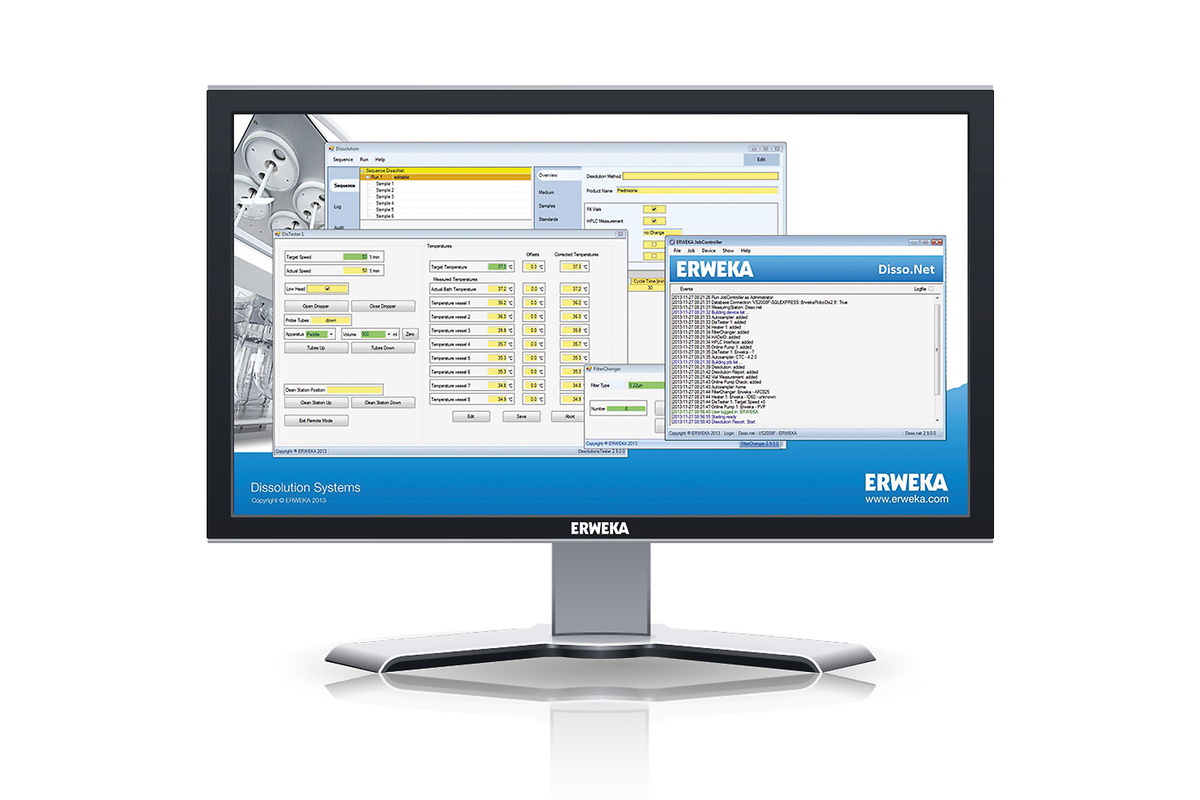
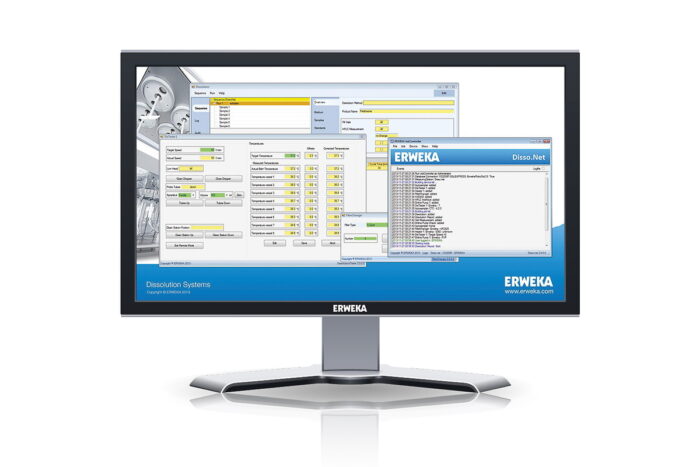
Disso.NET
The ERWEKA Disso.NET software is the perfect 21 CFR Part 11 compliant companion for our dissolution systems. The software provides support for all test methods that can be used with the ERWEKA DT dissolution testers, as well as the automated RoboDis II+.
Disso.NET helps with standard dissolution jobs, handles qualification tasks and provides control over every single function of the connected devices (e. g. dissolution tester, UV-Vis spectrophotometer or HPLC analysis device). The Audit Trail also creates detailed logs of all events and time periods. The software additionally includes an easy-to-use editor for comfortable programming of the dissolution methods (for highest repeatability). After finishing the dissolution test, Disso.NET generates comprehensive reports (as PDF-files) with your corporate logo and/or exports the results (e. g. in XML format).
Disso.NET 4 has an Active Directory connection, allowing for cross-system login data and user passwords. Countless passwords are thus avoided and easy handling is ensured.
Advanced Dissolution System With a Broad Feature Set Product Highlights

100% USP / EP / JP Compliant
Like all ERWEKA products, the dissolution online systems are 100% USP / EP / JP compliant

Easy Control of the Complete System
Full system control of all connected components with the Disso.NET software

USP Methods 1, 2, 5 and 6
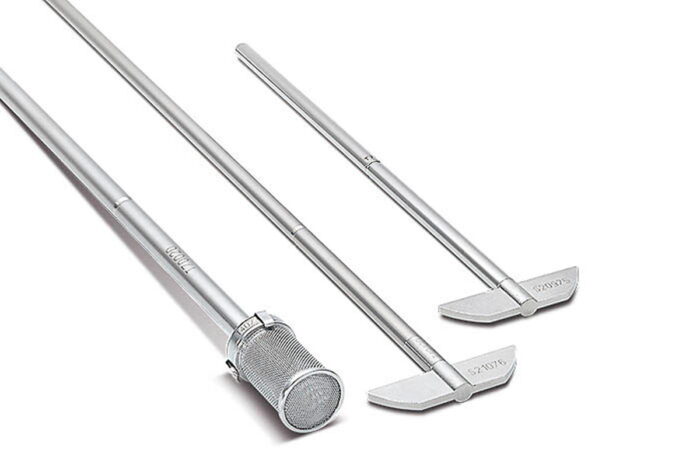
Use of a variety of attachments for different USP methods due to the standardized shaft design

Easy Cleaning
Easy cleaning of the water bath and the set-up area

External Heater
The external flow-through heater reduces the influence of external vibrations and ensures a constant temperature

Advanced UV / Vis Analysis
Different brands of UV / VIS analyzers are available
Proven Erweka Quality Throughout Components

Heart of the Dissolution Online System Dissolution Tester DT 950
The DT 950 is the centerpiece of our online system. It is 100% compliant with USP methods 1, 2, 5 and 6, enabling a wide range of dissolution tests to be performed with our system. It also offers the flexible high-head and low-head modes.
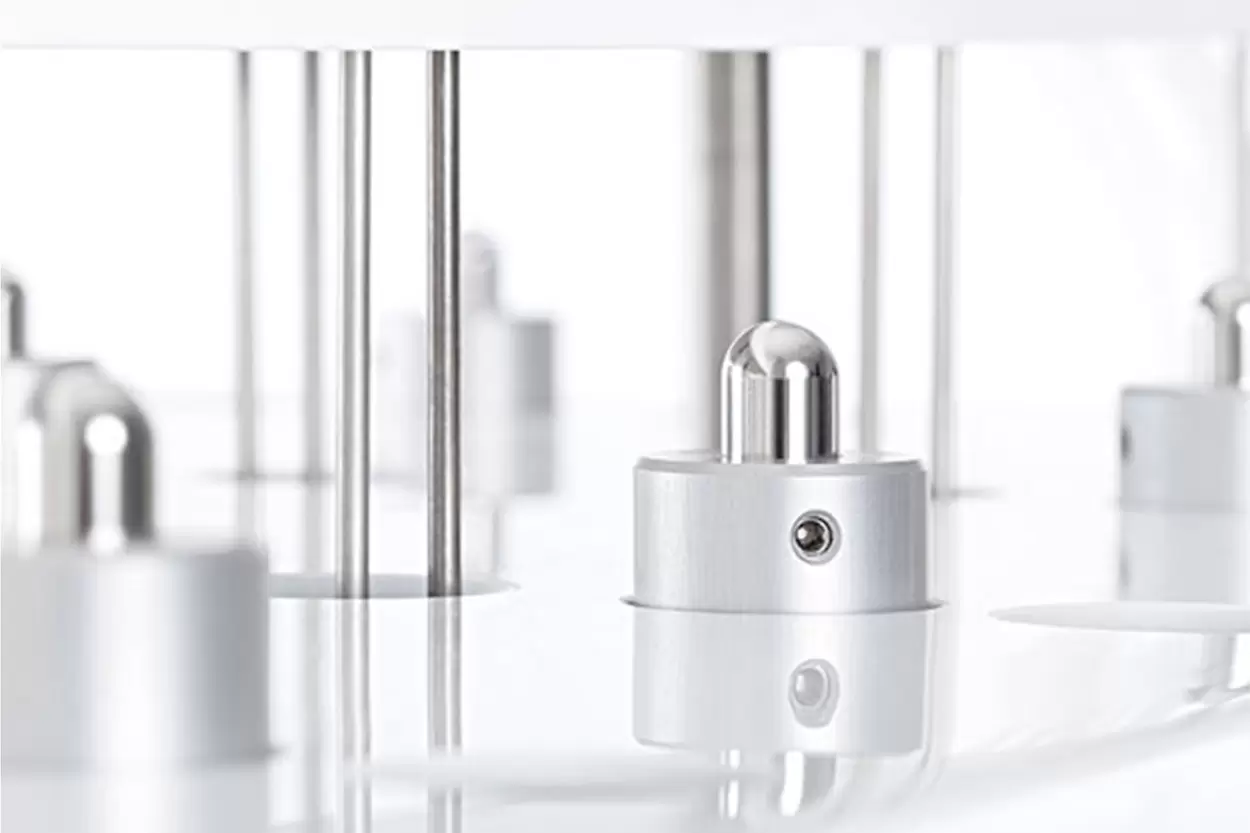
Precise Sampling According to USP Sampling Points Automated Sampling Station Ass-9
The automated sampling station ASS-9 is an add-on module for the DT 820 and DT 950. It allows samples to be taken directly from the vessel in accordance with the USP sampling points. These media are then pumped into the FRL 6/7/854 sample collector using the connected pump.

Efficient & Versatile Pump for Erweka Dissolution Systems IPC 8 Peristaltic Pump or PVP 820 Piston Pump
The IPC 8 peristaltic pump offers an accuracy of +/- 0.5 ml and is the basic pump provided with ERWEKA dissolution systems. The PVP piston pump manufactured by Erweka has virtually maintenance-free ceramic heads and is used for high volumes.
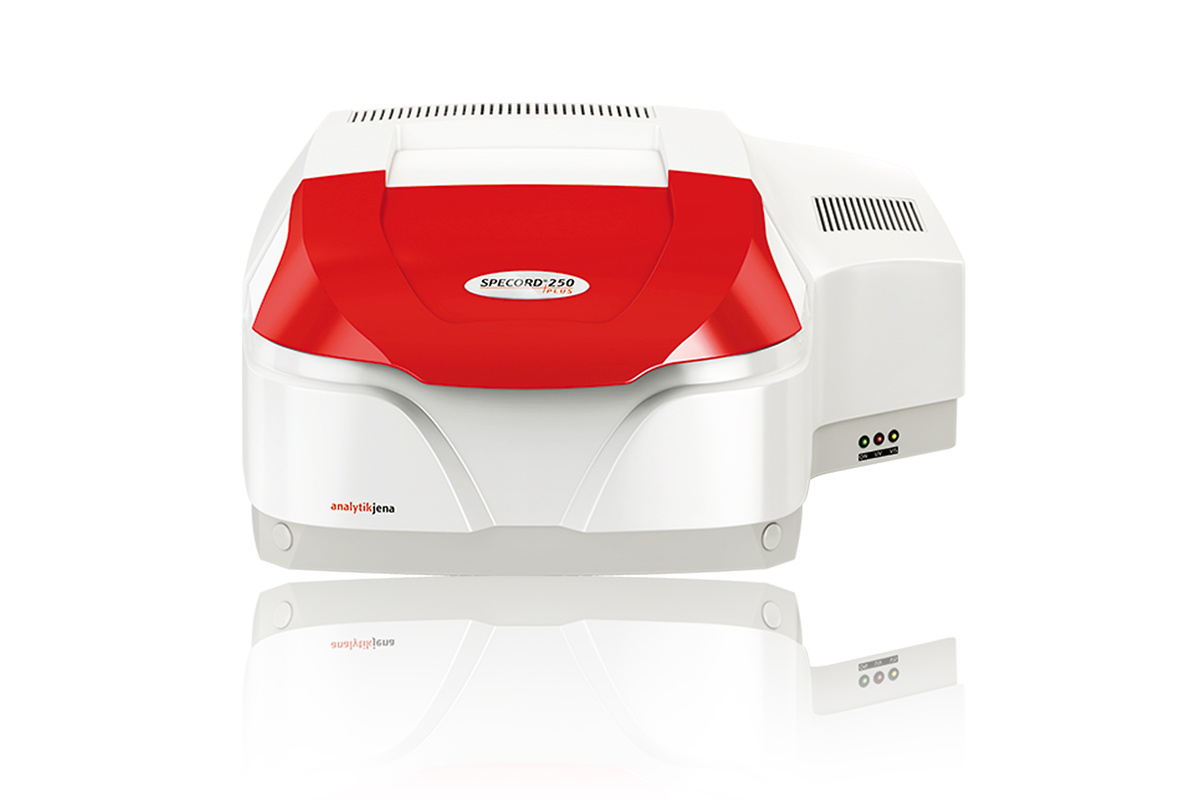
Always the Right Solution for Your Needs Versatile UV-Vis Analysis Devices Available
There are several UV/Vis analyzers available for ERWEKA online systems, all fully supported by Disso.NET.
- Shimadzu 1900i
- ThermoFischer Evolution Pro
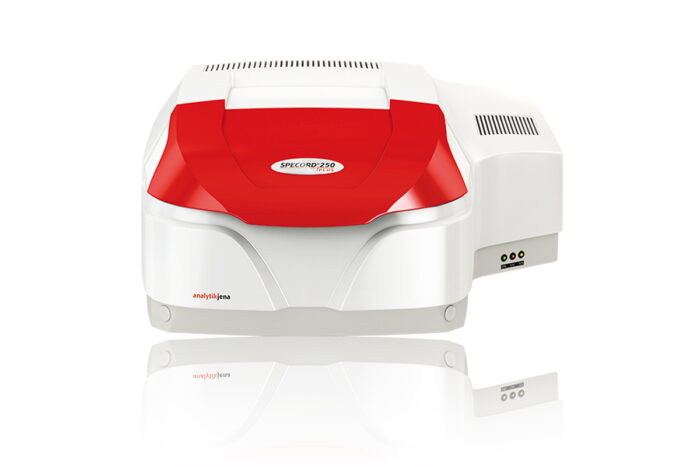
- Analytica Jena Specord
Advanced Dissolution Software for PC Controlled by Disso.NET
Disso.NET takes full control of ERWEKA online systems. The software offers a sophisticated user management, a wide range of features and comprehensive data export functions.
Easily Adjustable to Your Requirements DT Online System Variants
- DT 9510 series with 12-14 test stations, IPC 16 peristaltic pump and Analytic Jena Specord 210/16 spectrophotometer for UV-Vis analysis
- Alternatively ERWEKA PVP 620 or 820 piston pump available for filtration up to 0.22 μm

Dissolution Online System UV-Vis Options
- Shimadzu 1900i double-beam spectrophotometer with cell changer (8 positions)
- ThermoFischer Evolution Pro
- Analytic Jena Specord 200/10
- IQ / OQ / PV service & documents
- Maintenance contracts
Please select a component to show the according technical data
- DT 950
- DT 9510
- PVP Pump x20
- IPC Pump 8/16
- Analytik Jena Specord 200
Technical Data
| Weight | 42 kg |
| Dimensions (H x W x D) | 850 x 650 x 650 mm |
| Voltage | 115/230 V; 50/60 Hz |
| Speed | 20-250 U/min |
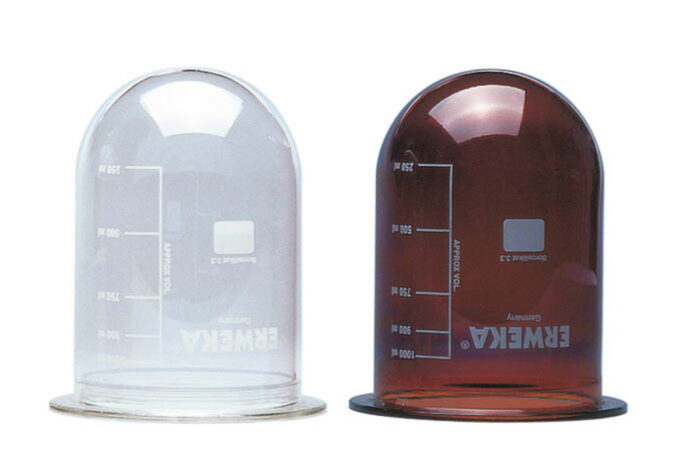
| Vessel volume | 400 ml / 1000 ml / 2000 ml |
| Interfaces | 1x RS-232, 2x USB, 2x Ethernet/RJ45 |
| Test stations (DT 956) | 6 in 2 rows |
| Test stations (DT 957) | 7 in 2 rows |
| Test stations (DT 958) | 8 in 2 rows |
| USP methods | USP 1 / USP 2 / USP 5 / USP 6 |
| Fuses | 2 A |
| Protection class | I/EN 61140 |
| Protection type | IP 21/IEC 529 |
| Operation | Touchscreen 7″, 800×480 Pixel |
| Sampling positions | High-head / Low-head / Cleaning mode |
| Ambient temperature during operation | +10 °C to +30 °C (ambient temperature min. -5 °C below set temperature) |
| Storage & Transport temp. | +5 °C to +40 °C |
| Relative humidity | 25-80 % non condensing |
Technical Data
| Weight | 110 kg |
| Dimensions (H x W x D) | 850 x 1062 x 650 mm |
| Voltage | 115/230 V; 50/60 Hz |
| Speed | 20-250 U/min |
| Vessel volume | 400 ml / 1000 ml / 2000 ml |
| Interfaces | 1x RS-232, 2x USB, 2x Ethernet/RJ45 |
| Test stations (DT 9512) | 12 in 2 rows |
| Test stations (DT 9513) | 13 in 2 rows |
| Test stations (DT 9514) | 14 in 2 rows |
| USP methods | USP 1 / USP 2 / USP 5 / USP 6 |
| Fuses | 2 A |
| Protection class | I/EN 61140 |
| Protection type | IP 21/IEC 529 |
| Operation | Touchscreen 7″, 800×480 Pixel |
| Sampling positions | High-head / Low-head / Cleaning mode |
| Ambient temperature during operation | +10 °C to +30 °C (ambient temperature min. -5 °C below set temperature) |
| Storage & Transport temp. | +5 °C to +40 °C |
| Relative humidity | 25-80 % non condensing |
Technical Data
| Weight | 28 kg (for PVP 1220/1420) |
| Dimensions (H x W x D) | 420 x 275 x 575 mm (for PVP 1220/1420) |
| Voltage | 115 V or 230 V, 50/60 Hz |
| Pump type | PVP 1220/1420 (for DT 9510) |
| Channels | 12 or 14 (for PVP 1220/1420) |
| Valves | / |
| Accuracy | +/- 0.5 ml |
| System compatibility | DT Online System, DT Offline System, DT On-/Offline System |
| Benefits | Filtration down to 0.22 μm with a flat membrane filtration. Particularly suitable for fully automatic dissolution systems. |
Technical Data
| Dimensions (H x W x D) | 125 x 145 x 220 mm |
| Interfaces | RS 232 |
| Channels | 8 or 16 |
| Accuracy | 25 ml +/− 5% |
| Media replacement | Standard |
| Double filtration (optional) | Only when first filtration with poroplast filters. No media replacement possible when double filtration. |
| Required type of sample collector | FRL 654 / 754 / 854 |
| System compatibility | DT Offline / DT Online / DT On-/Offline |
| Advantages | Basic pump possible with DT 950/9510, needs regular replacement of tubing |
Technical Data
| Weight | 22 kg |
| Dimensions (H x W x D) | 290 x 590 x 690 mm |
| Voltage | 85–264 V/AC, 50–60 Hz |
| Optical design | Double beam spectrophotometer with fixed spectral bandwidth (Specord 210 with variable spectral bandwidth) |
| Spectral bandwidth | 1.4 nm |
| Light source | Combination of deuterium and halogen lamp |
| Detector | Two silicon photodiodes |
| Spectrometric system | Monochromator with imaging grating and aspherical quartz-coated optics |
| Baseline deviation | ± 0.0005 A (200–1000 nm; slit 1.4 nm) |
| Zero point transmission | ± 0.05 %T (200–1000 nm; slit 1.4 nm) |
| Wavelength range | 190–1100 nm |
| Wavelength accuracy | ± 0.1 nm (Deuterium line at 656.1 nm) |
| Wavelength reproducibility | ≤ 0.02 nm |
| Wavelength registration speed | Up to 12000 nm/min |
| Wavelength min. data interval | 0.02 nm |
| Photometric range | -3 to 3 A |
| Photometric accuracy UV | ± 0.010 A |
| Photometric accuracy Vis | ± 0.003 A |
| Photometric reproducibility | ≤ 0.0005 A |
| Stray light 198 nm (KCl) | ≤ 0.3 %T |
| Stray light 220 nm (Nal) | ≤ 0.03 %T |
| Stray light 240 nm (Nal) | ≤ 0.03 %T |
| Stray light 340 nm (NaNO2) | ≤ 0.02 %T |
| Baseline noise at 500 nm (RMS) | ≤ 0.0001 A |


